





Bespoke suit
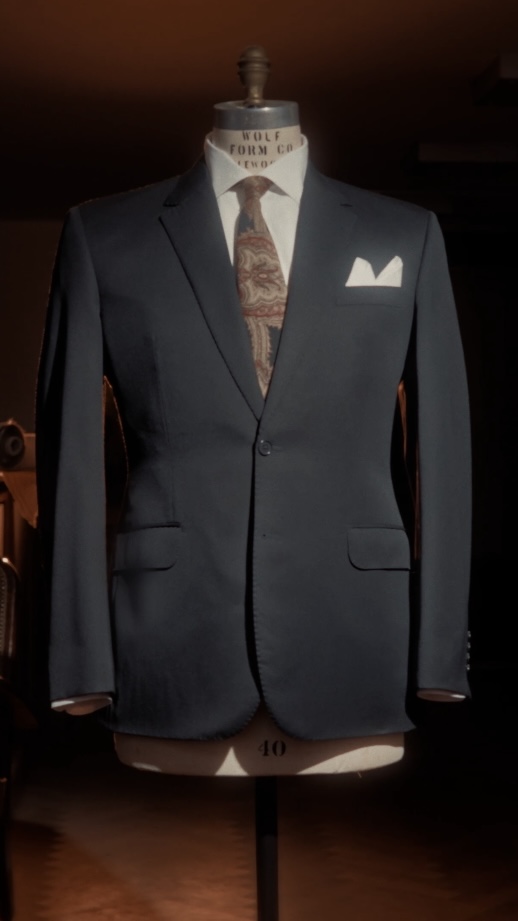
Bespoke, that magical word, nowadays misused or even abused. What does it truly mean and where does it originate? In 1607 ‘bespoken’ was first used as an adjective to describe something commissioned or ‘ordered to be made’. It quickly became synonymous with personal tailoring and is today the epitome of the sartoriale craft.
But why did Savile Row become a world famous centre for tailoring? With the restoration of the monarchy in 1660 a whole plethora of luxury shops opened around St James Palace to supply the decadent tastes of Charles II’s court. This slowly led to the development of Mayfair, north of Piccadilly, from countryside and large aristocratic residences into the sophisticated urban neighborhood we know today.
In 1731 the area behind Burlington House, known as Ten Acres, was developed to create Savile Row and Burlington Gardens. Initially populated by military families the new area attracted tailors looking for premises close to St James and the homes of the well-to-do in the newly laid out squares. Initially around Cork street and then, in 1803, on Savile Row itself. Also it is adjacent to Soho, where, at that time, many sewing workshops were to be found.
The first tailors to set up shop on Savile Row was Henry Pooles in 1846. Like most tailors at that time they initially specialized in military clothes but through their connections to royalty soon became the tailors to British high society. They were soon joined by H.Huntsman and Sons who open their doors at number 11 in 1849. Famous for being the most costly house they produce a very clean, perfectly balanced jacket which is exquisitely sewn. Many others opened on the ‘row’, each with their own style and specialty. Dege and Skinner, Ede and Ravenscroft, Kilgours, Welsh and Jefferies, Anderson and Sheppard to name just a few. Love it or hate it the “limp look” of Anderson and Sheppard with its wide, lightly padded shoulders epitomizes the glamorous years of Hollywood and many show business personalities still choose this house.
These historic houses remain true to the original meaning of bespoke where anything is possible and any request can be fulfilled. Unlike made-to- measure, where you may meet the tailor once, with bespoke you should meet your tailor regularly. You will have a whole team of experienced craftspeople: cutters, tailors, finishers and pressers ready to combine their decades of experience in creating unique garments, exactly to your body size and conformation, designed exclusively with you in mind. You will be measured and fitted a number of times, always carefully followed by your personal cutter, who will guide you through the pure bespoke journey. They should listen, guide and advise on styles, fabrics and details depending on your needs and lifestyle. Whether it be business wear, field wear for the country, evening, tropical or even ceremonial attire a trained tailor can lead you through the maze of unspoken rules and, with acute attention to detail, transform your wardrobe into an extension of your personality.
It is in this tradition that Simon Skottowe has built his business and team. He brought this British history with him when he moved to Hungary, and has, since 2001, created an out post of the London sartorial culture in the heart of Budapest. His clients come from many countries and backgrounds but they all have one thing in common, their love of the care and attention they receive when they, ‘ Bespeak an order for a new suit of clothes.’
For the uninitiated ordering bespoke clothes can be quite daunting. Over the years Simon has developed his own approach and whether you are a seasoned tailoring buff, or a curious beginner, he will listen and gently guide you through the journey. He works with a number world renowned fabric suppliers including: Holland and Sherry, Smiths Woolens, Porter and Harding and W. Bill.
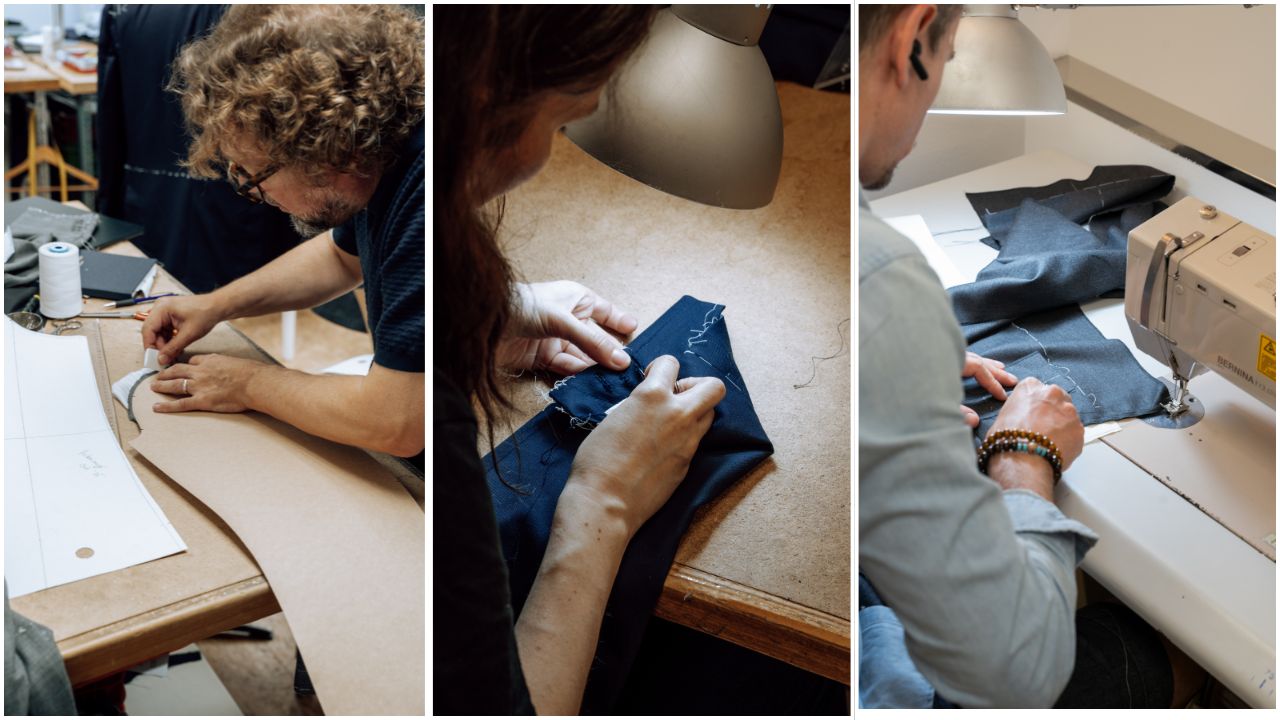
The Process
Consultation
The first consultation is all about getting to know the client and listening to what they would like. Measurements are taken and the body type and configuration are noted. With all this information Simon will draft the customers unique pattern using, like most of London’s best bespoke tailors, the F.R. Morris Tailor and Cutter system. The aim is to find an exact balance such that the garment falls perfectly, allowing an ease of movement while being elegant and not too roomy. From correcting differences in the shoulders and the chest, to creating a gloriously V shaped torso, having a bespoke suit made offers a wealth of options to highlight your best features and minimize any physical imperfections.
Fittings
For each bespoke order Simon requires to see the client for at least three fittings. Once the individuals pattern is ready we prepare the first (toile) fitting. From this fitting all the modifications are noted and applied to the paper pattern: the balance, proportion, lengths and overall silhouette. Following this a first baste is made in the chosen fabric with the full canvas in the jacket. Now we can start to see the final shape of the jacket and the line of the trousers. We continue to refine the suit at the second, or pocket baste, when the client needs to be wearing a suitable shirt and correct shoes. The final balance, button positions, sleeve lengths and pitch and other details and refinements are checked and the suit can be finished.
Sewing
All true bespoke tailors use a similar system with multi layered canvases stitched together by hand. It is in the choice of the canvas and in the density of the stitching that the tailor’s style comes to the fore. Simon insists on using the highest quality canvasses that he imports especially from Italy. This together with all the internal construction builds a jackets final and stable shape. Thousands of hand stitches go to create a true, high quality, bespoke garment.
Fine hand finishing is the final touch that sets bespoke suits apart. Each tailor has their preferred style, but buttonholes should be worked by hand, linings felled in by hand and sleeves, collars and the edge stitching should be similarly done by hand. Simon prefers silk thread for the buttonholes and natural materials for the buttons.
Ironing
Pressing follows, up to two hours of careful work to finally set the shape and remove all the marks from the temporary basting. Finally the buttons can be attached.
Five highly skilled craftspeople work more than eighty hours on each suit. All the production is carried out in house with machines being used only for the main seams.
The Result
When one is judging a suit the three fundamental things to look for are: harmony of shape and styling, a flattering cut and silhouette and a correct balance and proportion. Then comes the correct choice of cloth, appropriate trim and of course, expert construction and finishing. Only true bespoke tailoring can give this amount of attention to all aspects of making a garment. The drape of the sleeve, the line of the shoulder and how the collar and lapel roll to just above the top button without a hint of tension. You cannot even see most of the work, it is hidden inside. But it is the hours of patient hand stitching, shaping and pressing that sets bespoke tailoring apart. Only when you slip on a bespoke jacket can you fully appreciate the difference as it falls effortlessly into place and becomes part of you.
It should be in the self confidence of the wearer and the recognition of those “in the know”, rather that the applause of the crowd, that a true bespoke suit is appreciated.